Surprise Visitor of the Reptilian Kind

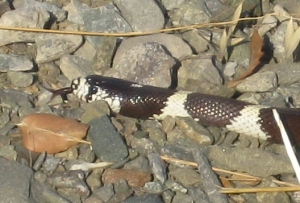
Over the Fourth of July weekend, I got a pleasant surprise. A California Kingsnake showed up in our garage (in southern Alameda County) in the middle of the afternoon! Perhaps the hot weather had something to do with it. Somehow it ended up picking the right house to visit. It was about a meter long and quite mild-mannered.

California Kingsnake

California Kingsnake

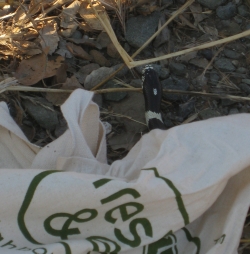
I caught it and put it in a cloth bag to keep it calm. It was one of those reusable shopping bags and it felt like quite an appropriate reuse of the bag.

Kingsnakes have a very unusual habit – they will hunt and eat venomous snakes including rattlesnakes. They have developed immunity to the venom. The “king” in their name comes from this habit. They are found throughout California. They are a sub-species of the Common Kingsnake which ranges over much of the USA.

I decided to release him near Sunol Regional Wilderness. When I opened the bag, it took some prodding to get it going. It slowly poked its head out of the bag and then glided smoothly out to its freedom. At first it wanted to head towards the road and I had to persuade it to go in the other direction.

California Kingsnake EmergingCalifornia Kingsnake Close up


Since it was not moving too fast, we were able to take this video.

You can find out more about Bay Area reptiles on our reptiles page. An earlier nocturnal encounter with a Kingsnake is in this post.

Posted in Backyard, Snake | Tagged | Leave a comment

A Summer Afternoon in Lime Ridge

An Afternoon in Lime Ridge

May 2012

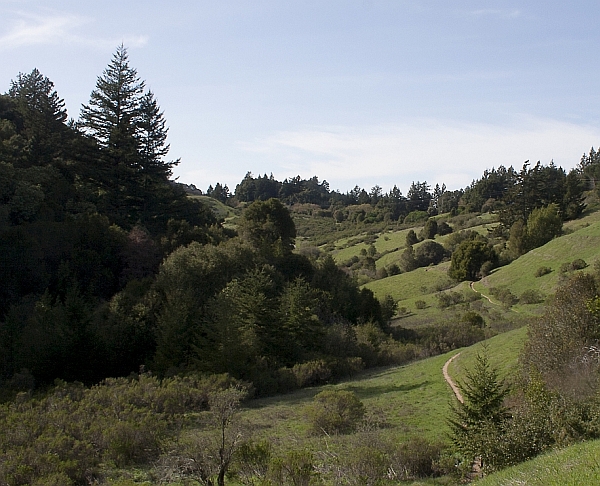
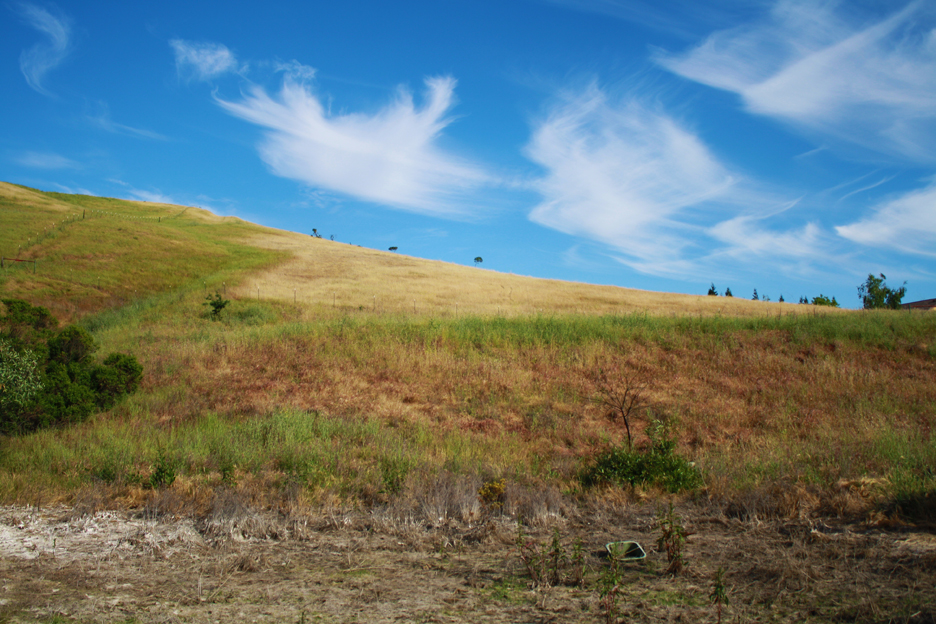
It is a pleasant, sunny afternoon in the East Bay. My brother and I are on a nature hike in Lime Ridge open space, an area stretching from Walnut Creek to Concord, and home to a variety of reptiles, amphibians, birds, mammals, and insects. The landscape is a mixture of greens and browns, abundant with oak trees, shrubs, and tall grasses.
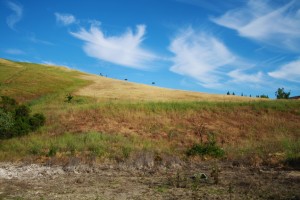
As California’s dry climate approaches the hot summer months, the spring pond has mostly evaporated, leaving behind some marshy areas of mud and grass.

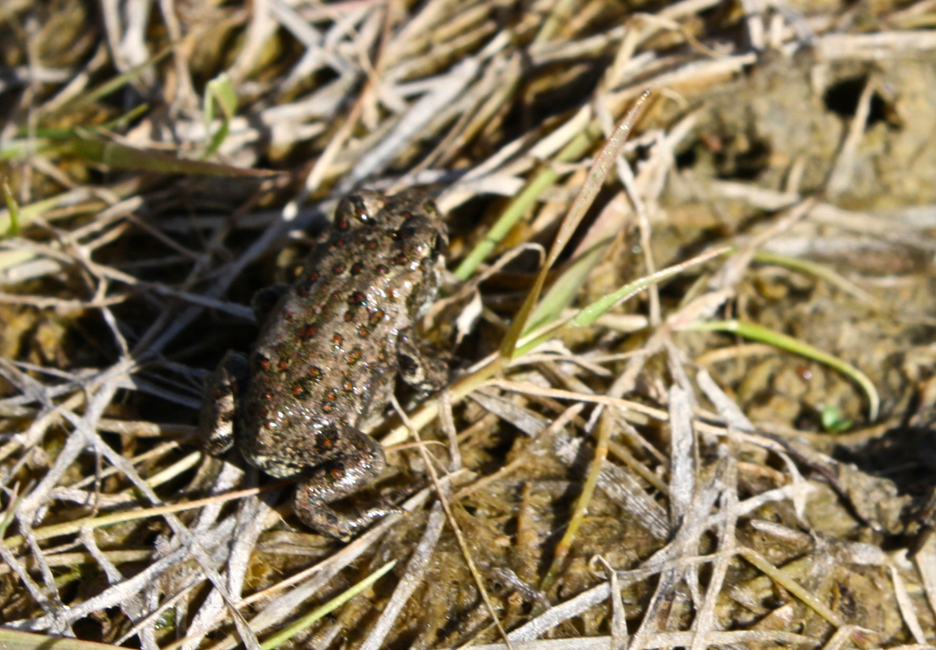
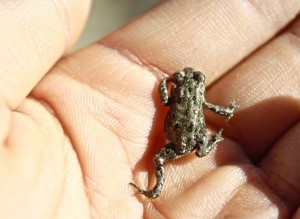
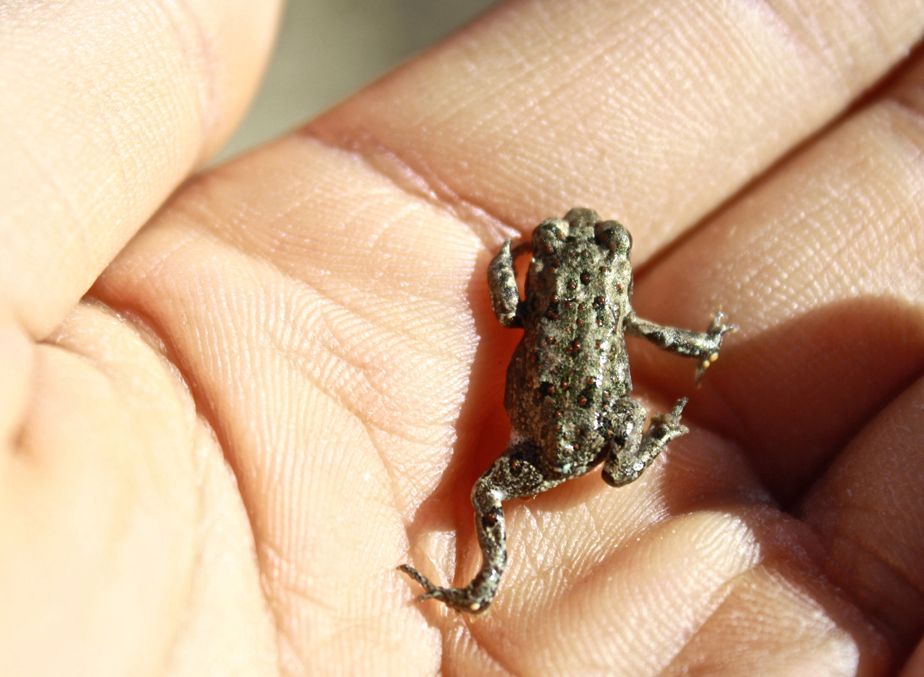
Here, we noticed our first sign of movement—a tiny little shape, no larger than a thumbnail, crawling along the muddy ground. When we crouched down and looked closer, we realized it was a young Western Toad.
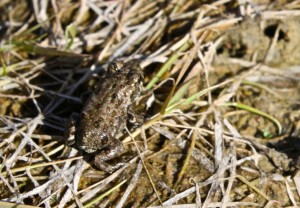
As we continue into the meadow, we realize the entire area – stretching as far as the eye can see – is teeming with thousands and thousands of juvenile toads, hopping around in the grass and hiding in holes in the mud. We estimated that we saw five to ten toadlets per square meter.
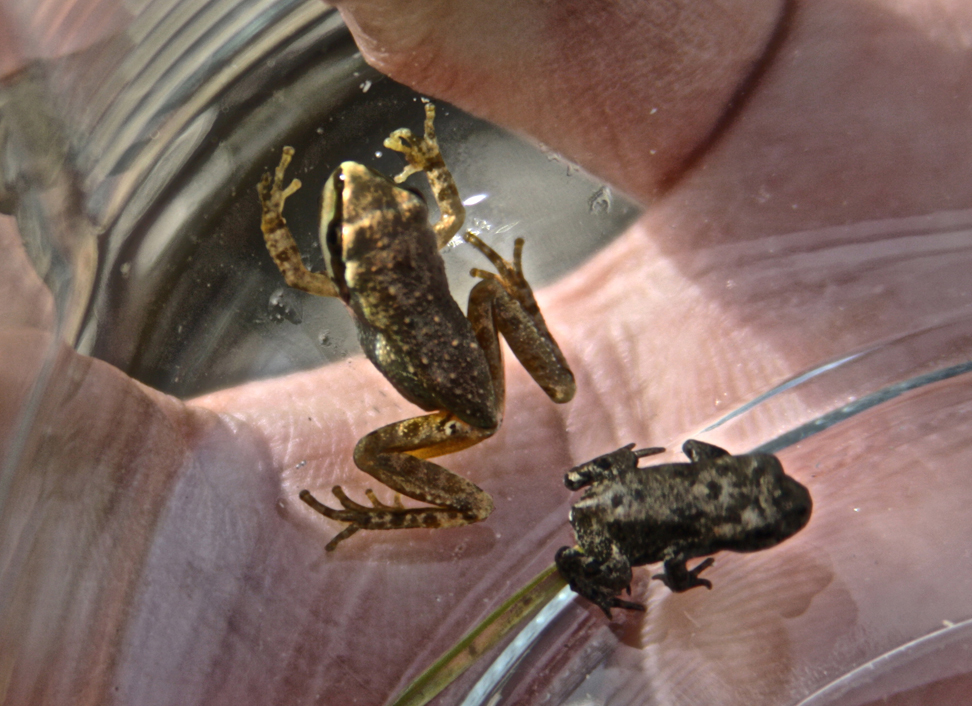
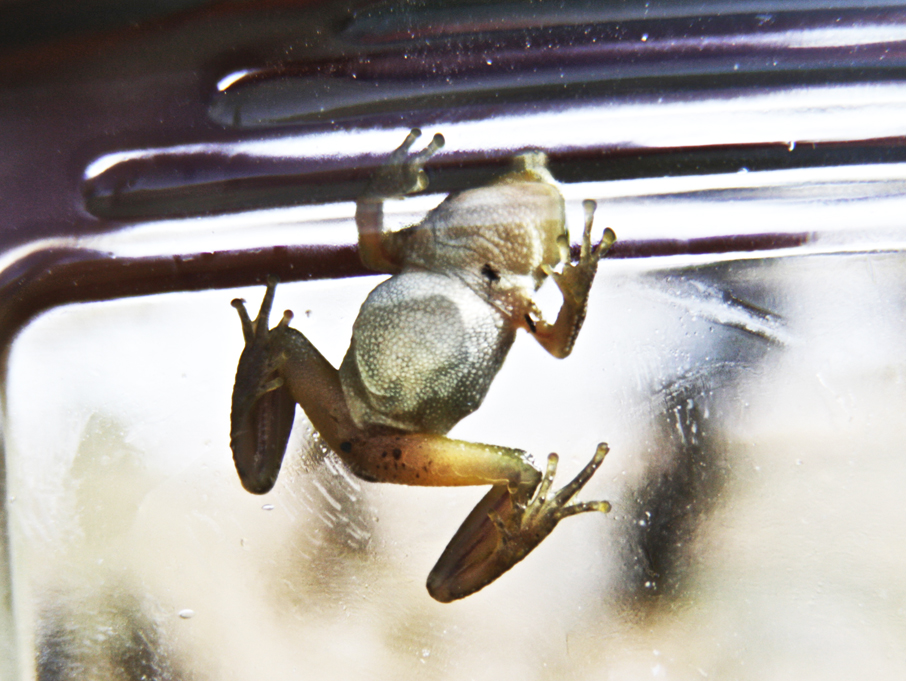
We collect some of them in a jar so as to observe them more closely. The amphibians remained crawling around at the bottom of the jar, except for one that nearly escapes the jar. This individual is a light-green and yellow color. It is about the same size as the juvenile Western Toad but has slightly different markings, and we noticed it is able to climb up the side of the jar, unlike the rest of the toads.
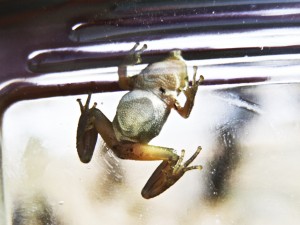
This species of the amphibian–which we have identified as the Pacific Chorus Frog (or Pacific Treefrog)–is much more sparse than the toads were. We estimated about one Pacific Treefrog for every 60 Western Toads.

You can see the difference between the two species here.
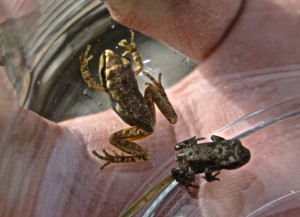
Interesting Facts:
-It is relatively easy to distinguish between a frog and toad—the differences between the two may seem subtle, but there are a few key distinctions. Although the Pacific Treefrog is nearly the same size as the juvenile Western Toad, frogs have a smooth skin surface, while toads have bumpy skin. Frogs also have webbed or padded/enlarged toes, whereas the toad does not. The frog is also an exceptional jumper—it has longer legs, so it can jump much farther distances than the toad in relation to its body length.

-Frogs actually absorb water through pores in their skin—as amphibians, they need to be in wet areas to avoid water loss and dehydration.

-The Pacific Treefrogs have an interesting quality—they are able to fluctuate between “color morphs,” ranging from brown to bright green. They can also change from darker to lighter and even shift pattern markings. These shifts in pigmentation are caused by differences in the frogs’ habitat lighting, brought about by seasonal changes. The initial transformation can be noticed immediately, and a full color morph can take from weeks to months.

-The Western Toads in lower-elevation regions such as the area we hiked) mate in the late winter to early spring, while the species in mountainous regions mate in the late spring to summer. The juvenile toads we saw, about the same size as the Pacific Treefrogs, had newly developed from s1171
tadpoles and were still small, but eventually grow to be much larger than the frogs. The toads won’t be able to reproduce until they are 2-3 years old!

-Frogs and toads are considered “indicator species”—which means that the presence of these amphibians indicates a healthy environment. Recently, these delicate and vulnerable amphibians have been in rapid decline due to climate change, pollution, destruction of their natural habitats due to construction, chemical contamination from fertilizers, etc. Lately the Bay Area has seen a lot of rain—the Lime Ridge area last year around this time was completely dry due to drought. We were excited to see so many young toads and frogs on our hike this time—it suggested a healthy habitat and thriving ecosystem.

After a few minutes, we release the Treefrog and Toads, making a mental note to visit again in a few weeks to see how the toadlets are developing.

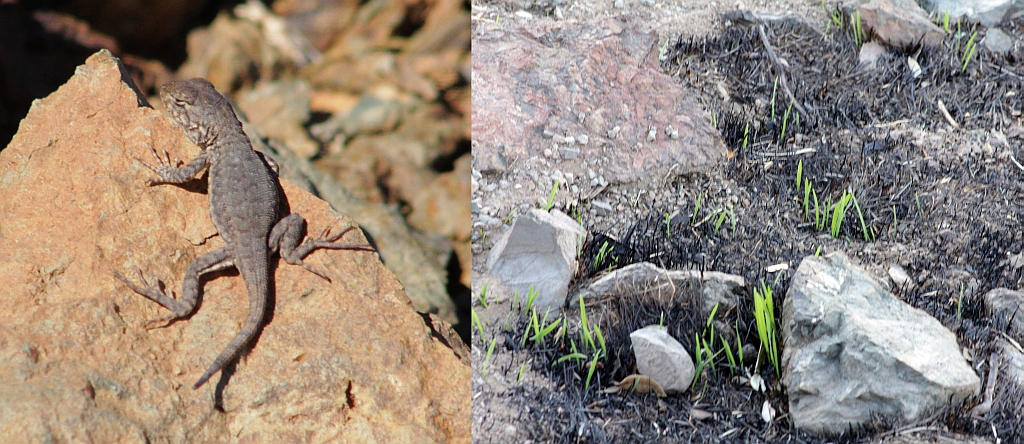
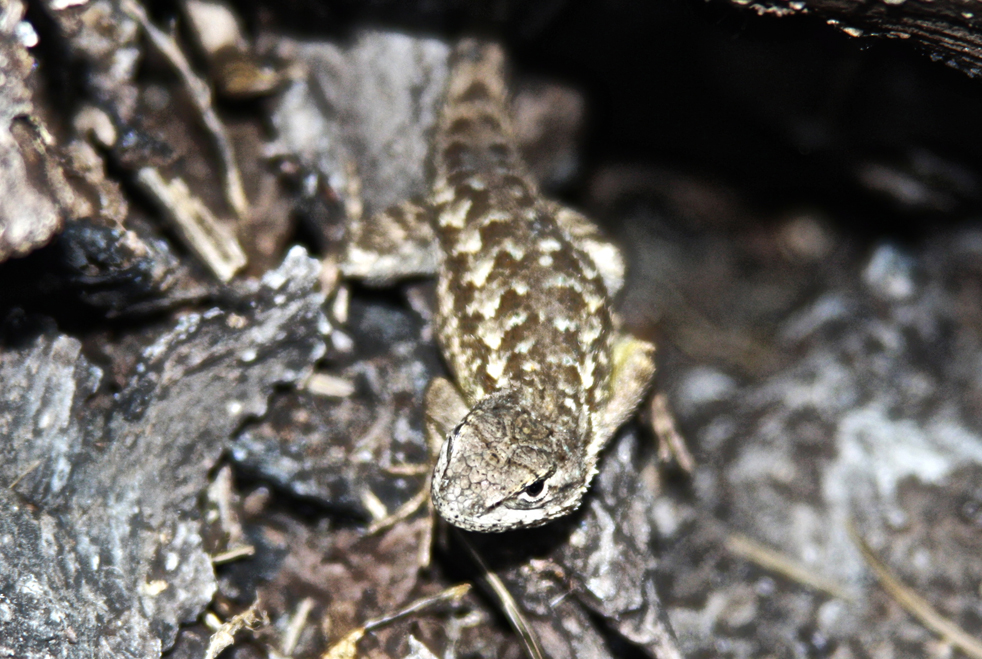
Continuing along our hike, we spotted the Western Fence Lizard.
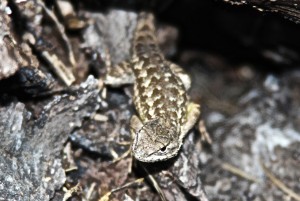

Interesting Facts:
-The Western fence lizard may appear dull in hue (which enables it to camouflage with the ground, rocks, or tree trunks), but the underside is a bright, metallic blue color.

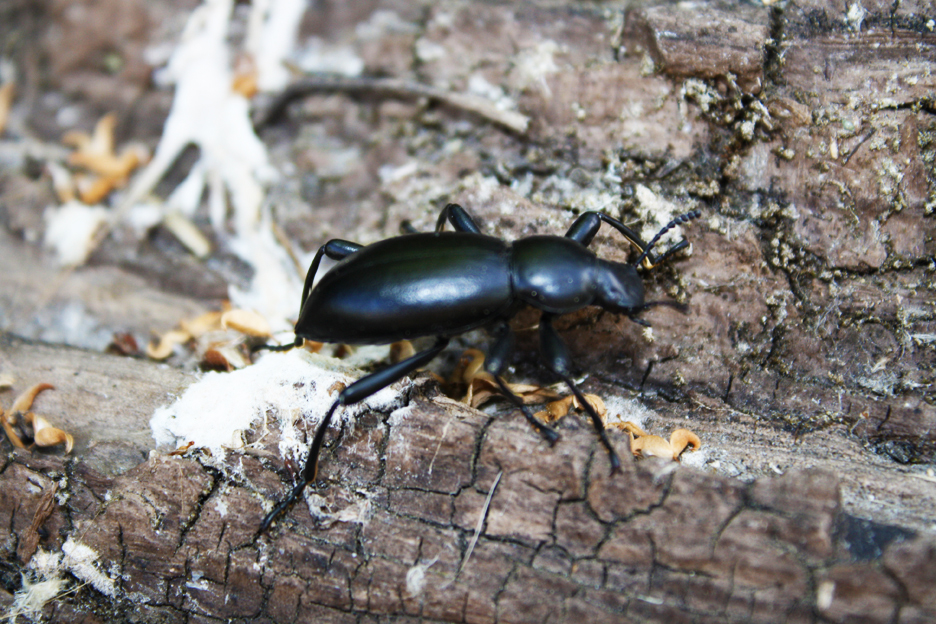
When we go to exit back through the open space gate entrance, I narrowly avoid stepping on a Desert Stink Beetle! Disturbing this seemingly harmless critter would have been a big mistake…
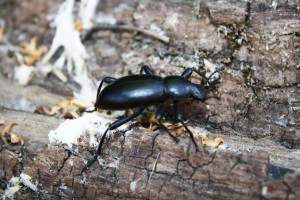
Interesting Facts:
-This species, a type of darkling beetle, raises its abdomen when aggravated or in danger, releasing a foul stench, which it secretes from glands at the tip of its abdomen.

-Most predators avoid this beetle due to its stink and unpleasant taste, except for a few, including grasshopper mice, who avoid this by sticking its abdomen into the sand and consume it headfirst.

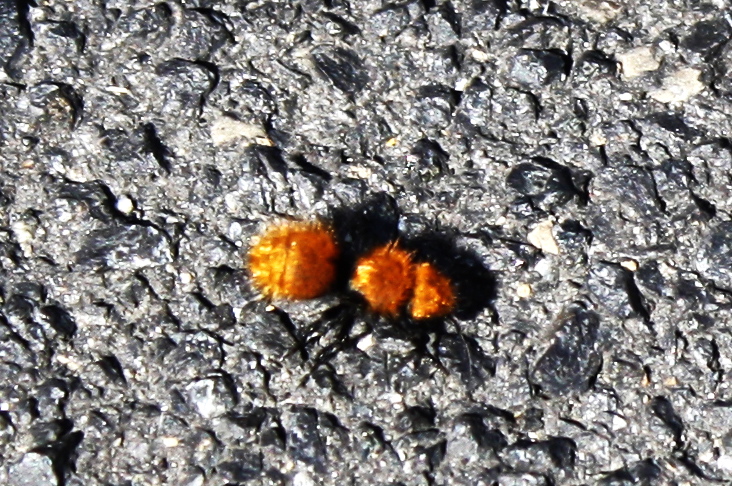
While crossing a cul-de-sac bordering the open space we just exited, we spot a strange looking insect that appears to have red fuzz covering its body. Its appearance gives it the common name Velvet Ant, although it is actually a type of wasp, belonging to the family mutillidae.
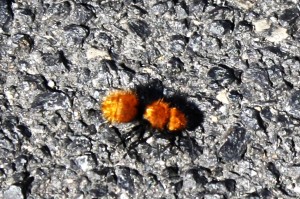
Interesting Facts:
-The female Velvet Ant invades the ground nests of other wasps and bees, laying its eggs on the larvae (hosts). Once the host larvae develop into their pupal form, the newly hatched velvet ants eat their hosts, spinning their own cocoons inside their hosts’ pupal cases.

-Male Velvet Ants have wings, and look quite different from the females. The females are wingless, however they are often seen as pests, as they can deliver a nasty, painful sting—earning them the nickname “cow-killer.”

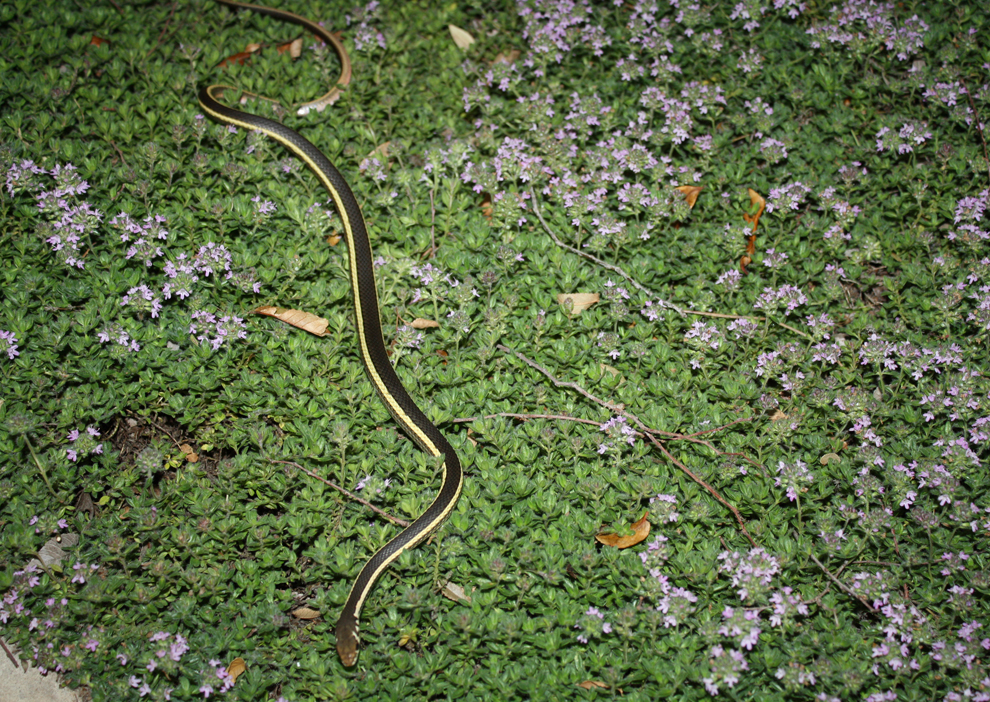
As we return home from our hike, we find a California Striped Racer, also known as the Alameda Whipsnake. My neighbor spotted it slithering in our yard outside of the house.
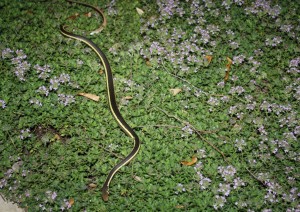
Although usually fast and skittish, this one is relatively calm and doesn’t seem too frightened…

Interesting Facts:
-Most types of racers are a single, dull color. The California Racer is unique among many racers because it has bright yellow stripes down its body.

-California Racers are often confused with Gartersnakes, another common snake in the area with similar stripes and colors. However, they can be distinguished by the placement of the yellow stripes on their back—the garter has a stripe running down the center of its back, while the California racer has two stripes and a thick black center stripe. The Gartersnake also has rough, or “keeled” scales, whereas the California Racer’s scales are smooth.

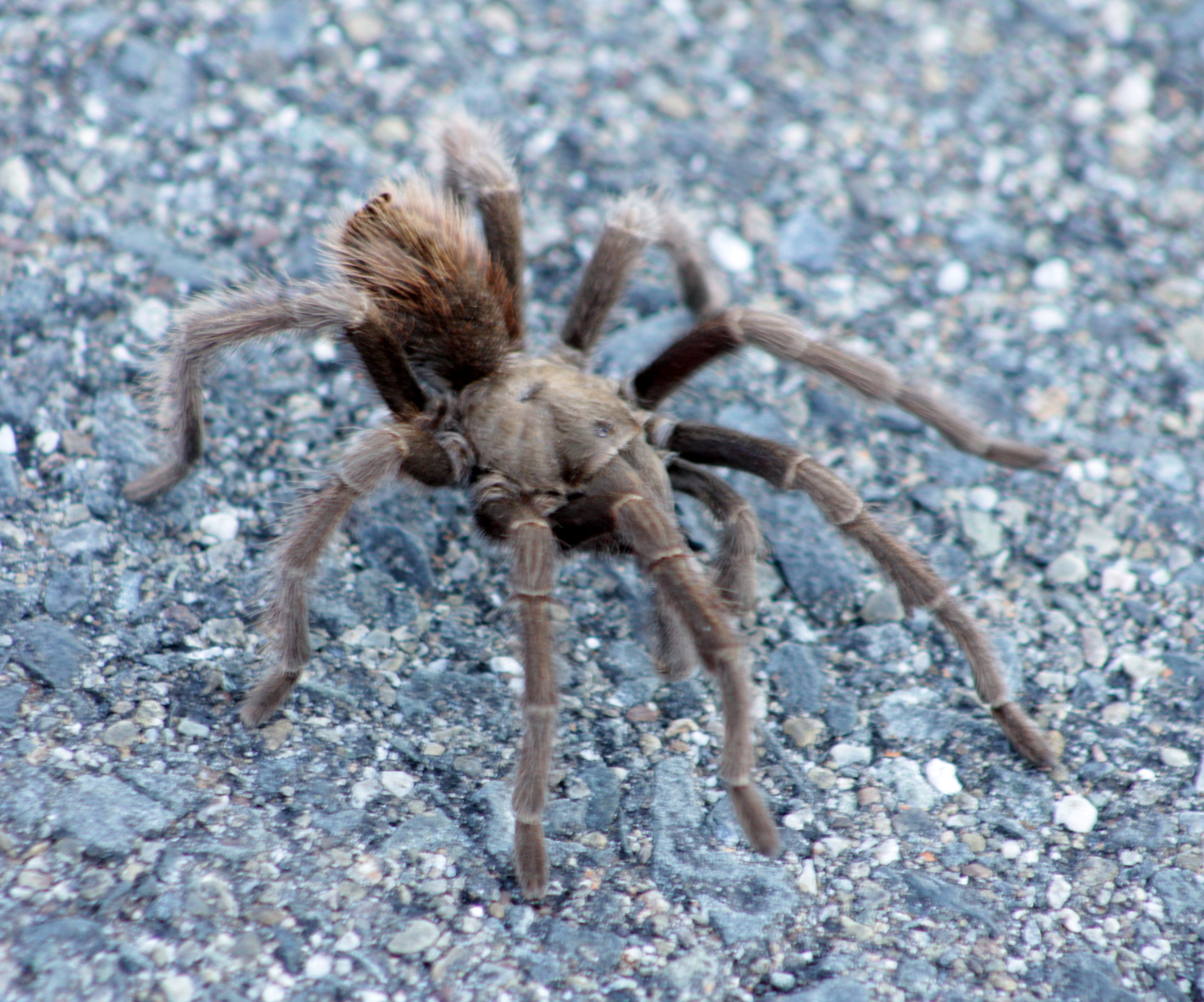
Throughout my childhood, I was lucky enough to have grown up right next to the Lime Ridge Open Space. Since the entrance to the wildlife reserve was only a block down from my house, I’ve gone on countless nature hikes with my family, exploring the different types of species of frogs, snakes, mammals, birds, and insects. From trekking through the hills with my neighbors as a child, treading along the various wildlife trails with my family, catching insects with my brother and looking at them under a magnifying glass, my experience with the open space has occupied an integral and meaningful place in my childhood. I’ve learned a lot over the years, things you can’t learn simply from just reading books, taking a biology class or watching Animal Planet. From my many experiences and encounters—being eight years old and watching in awe as a tarantula crawled over my shoe, bringing home tadpoles each year and raising them into frogs and then releasing them back in to the wild, or thinking I was the crocodile hunter and trying to grab every snake I saw (poisonous or not)—I’ve become rather fond of the nature I grew up with, and have learned to respect all wildlife, no matter how slimy, strange, stinky or slithery.

See also this earlier trip report for Lime Ridge.
Posted in Places, Trip Report | Tagged , , , , , , , , | Leave a comment

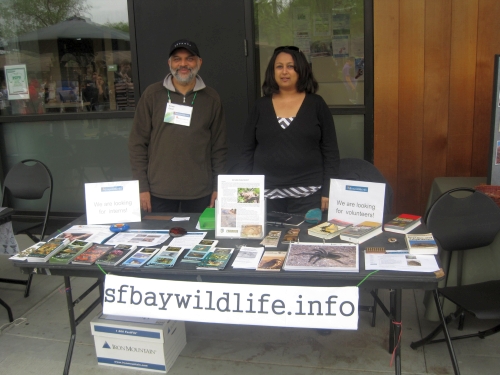
sfbaywildlife.info at Foothill College Earth Week Faire 2011

Foothill College Sustainability logosfbaywildlife.info was invited to participate in the Earth Week Faire at Foothill College on 20 April, 2011.  It was organized by Gillian Schultz  and the Sustainability group as part of the week long celebration. We were in great company – other participants included:

  • Acterra
  • Audubon Society
  • California Native Plant Society
  • Santa Clara County Open Space Authority
  • Stevens & Permanente Creeks Watershed Council

sfbaywildlife.info table at foothill college earth week faire

Many students and a few faculty stopped by. The wildlife photographs we had on display were very popular. We were also promoting the Bay Area Puma Project on behalf of the Felidae Fund. We fielded a lot of questions about Pumas (Mountain Lions/Cougars) and a few about Bobcats.

One of the great things about participating in these events is that you make useful connections with the people active in other related organizations. You get to meet with people without the hassle of coordinating times and setting up meetings. We were glad to meet Joanne McFarlin of SPCWC and Dana Litwin of the Open Space Authority.

Earth week faire at Foothill College

Posted in Event | Leave a comment

Lizards on a Log at Las Trampas

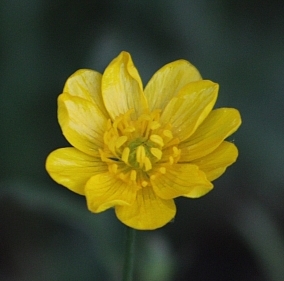
California Buttercup

California Buttercup

It was a nice weekend in early April and Las Trampas Regional Wilderness was beckoning. There was no rain. It turned out to be a good day for lizards and butterflies. And some early wildflowers were already blooming. The most common were the California Buttercups.

Then I started seeing the butterflies. The first one was the Pipevine Swallowtail. This was a lifer for me (I am still a novice butterfly watcher).  I saw several more later but they all proved elusive for photography.

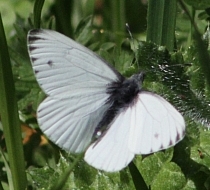
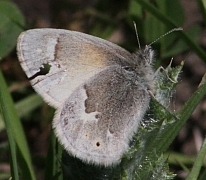
Next was a Margined White – a lifer.  This was identified later by experts on our flickr group and bugguide, based on this photograph. And soon after that I saw a California Ringlet which is a subspecies of the Common Ringlet. This is a fairly common species in grassy, open areas.

Margined White butterfly

Margined White butterfly

California Ringlet

California Ringlet


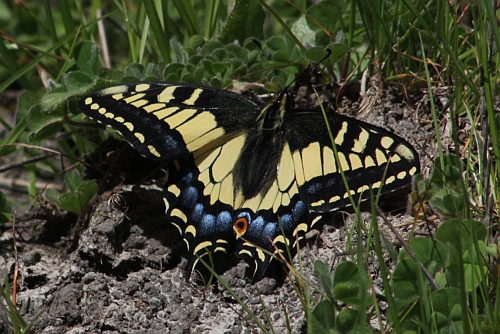
Following the Bollinger Creek trail, which runs parallel to the creek, I had tall trees on my left and grassy slopes on my right. The next species to show itself was the Anise Swallowtail which is a really pretty butterfly.

Anise Swallowtail

Anise Swallowtail

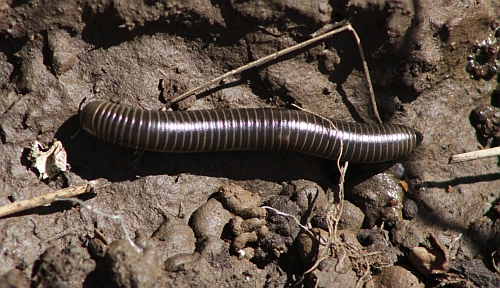
Under a fallen tree branch I found this millepede. If you know its identify, I would love to hear from you.
Millipede

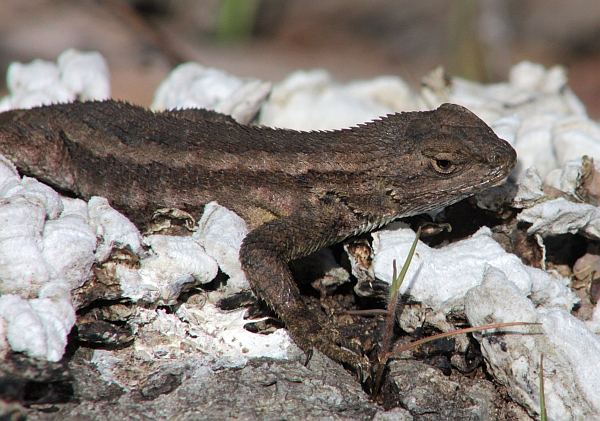
At the point where the trail turns left to cross the creek, I stopped to check out an interesting log. I saw a scurrying movement and then spotted a Western Fence Lizard.

Western Fence Lizard

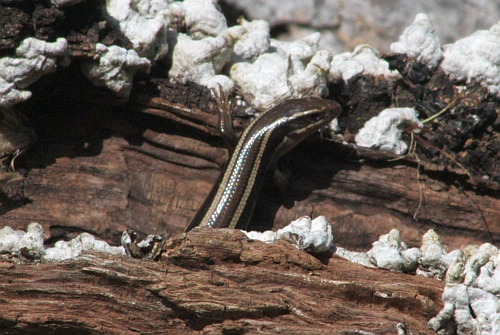
There were several Fence Lizards on the log. To try and get good photographs of the lizards I went a bit close and then stood still for a while. My patience was rewarded by an uncommon sighting. A head poked out of a crack in the wood. Checking it out with my binoculars, I was thrilled to see that it was a Western Skink.

Western Skink

Later I was able to see its blue tail during the few glimpses I got while it foraged under the fallen log and the rotting debri around it. I also saw another skink which had lost its tail. Once before we had a great sighting of a skink at Las Trampas. Spring is a wonderful time to be out on the trail – go out and see what lucky sightings you might get!

Posted in Places, Trip Report | Tagged , , , , , , | Leave a comment

Salamanders at Pleasanton Ridge Regional Park

It’s about that time of year again when salamanders become easier to see around the bay area so I took a few hours today in between bouts of severe rain to poke around some logs at Pleasanton Ridge Regional Park.

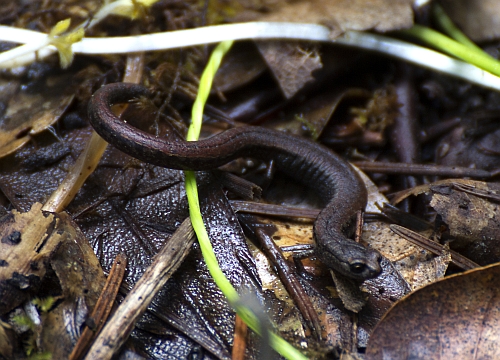
We’ve seen several amphibian species here before including California Slender Salamanders, Yellow-eyed Ensatinas, California Newts and Western Toads so I figured I had a good chance to find something interesting. Also see our post about salamanders in Tilden.

After carefully peeking under a few logs which revealed several beetles and worms but no salamanders, I gave up and decided to enjoy the scenery: the green of the grass and distant snow-covered hills made it quite a sight.

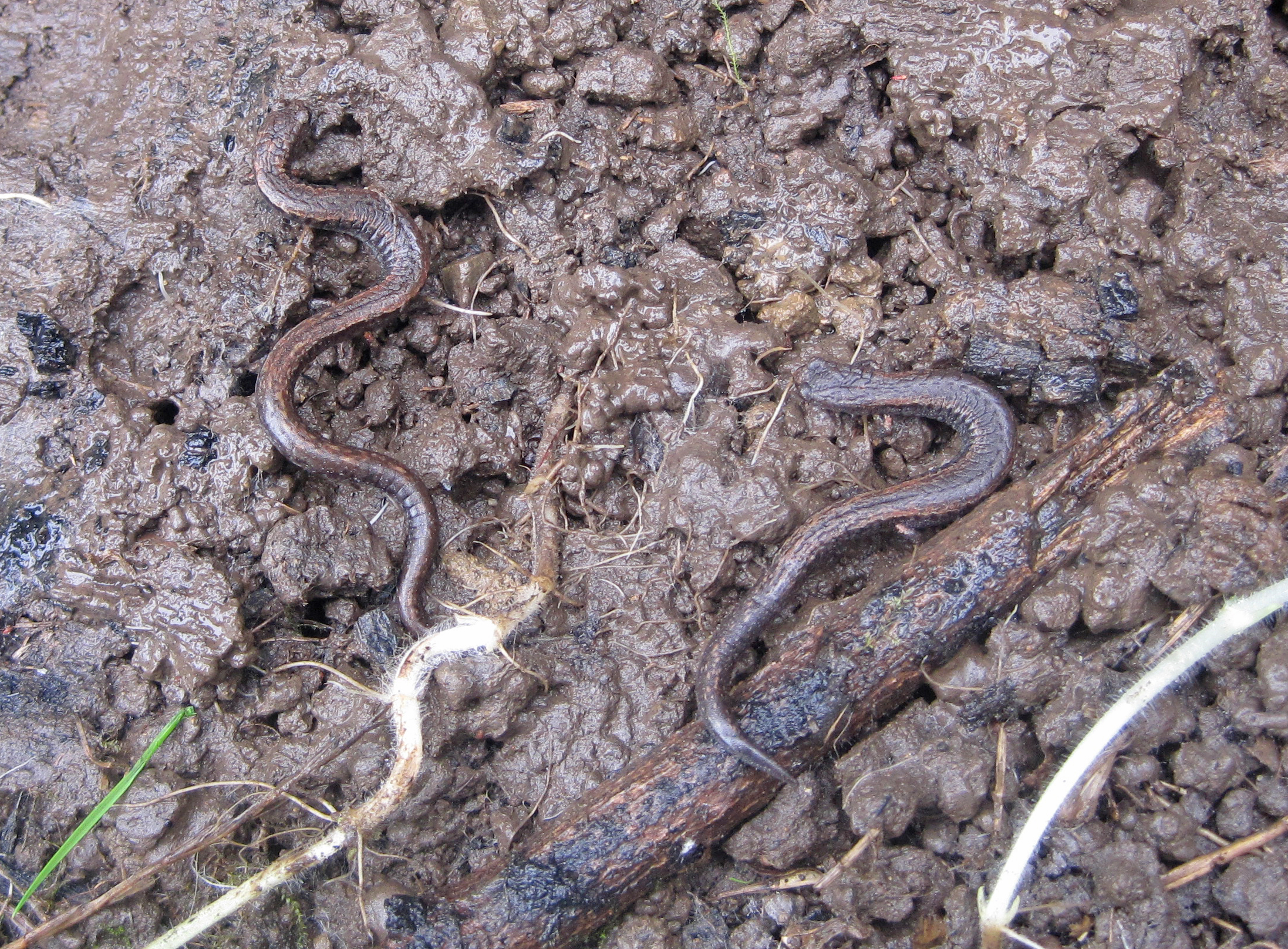
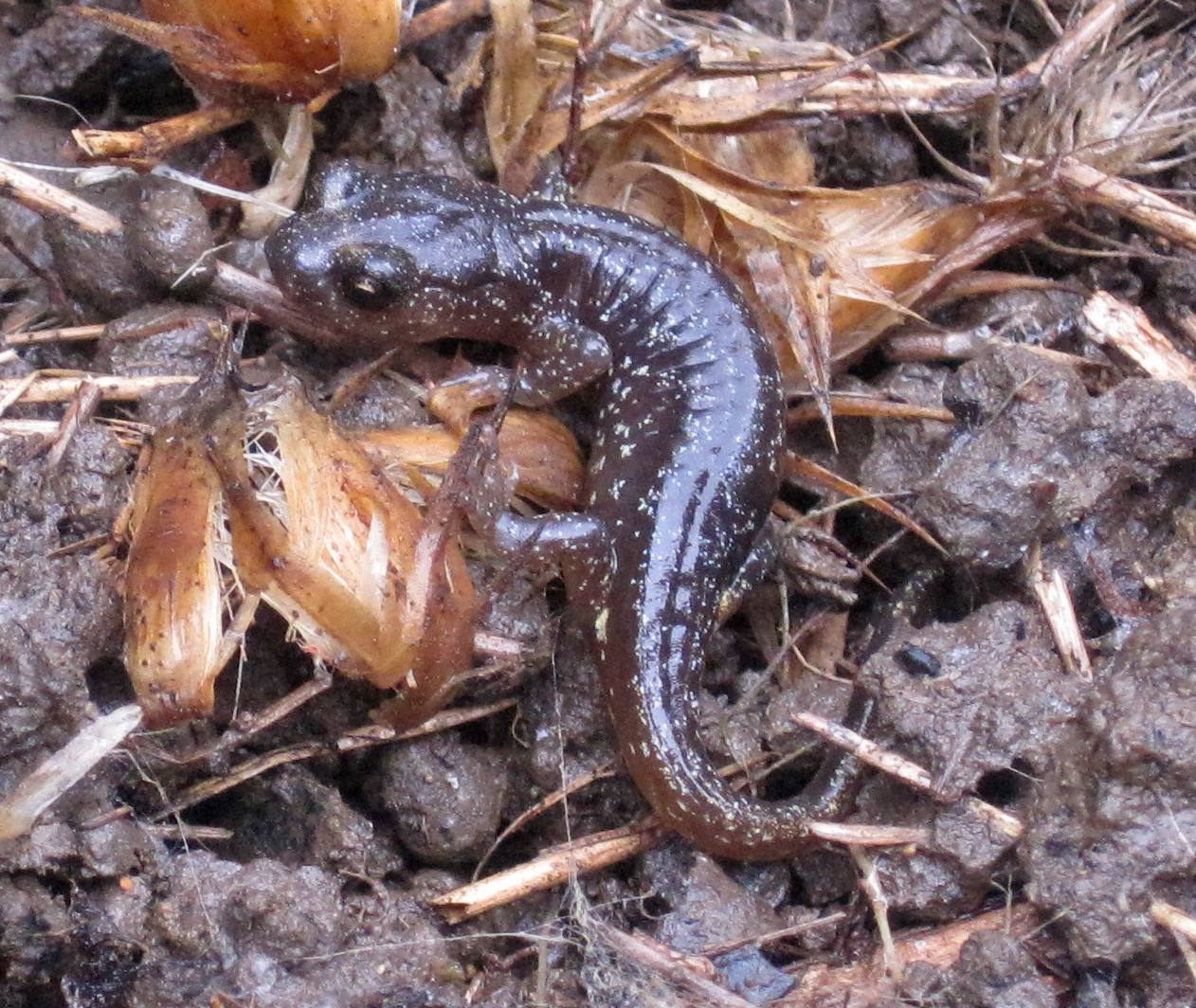
But on my way back down from the ridge line, I decided to check one more log under which I found four California Slender Salamanders and one young Arboreal Salamander – a first for me.


Two California Slender Salamanders at Pleasanton Ridge

The Arboreal Salamander was a small one and resembled a young Ensatina we had found on the ridge before, though the color is quite different. Check out our amphibians page to get some more information on the different species of bay area salamanders.

Arboreal Salamander at Pleasanton Ridge Regional Park


Posted in Places, Trip Report | Tagged , , , , , , | Leave a comment

An Afternoon Encounter with two Ladies

It was a nice warm afternoon in the East Bay this weekend. I was delighted to see butterflies flying around in my neighbors front yard, which has lots of flowers and catches the afternoon sun. There was the usual multitude of Fiery Skippers. They are very active and playful as they fly around and chase each other.

Fiery Skipper

A white butterfly flew by which turned out to be a Cabbage White. Then a bigger, more colorful butterfly caught my attention. It was a Painted Lady. This is the butterfly whose spring migration is in the news every few years. Veritable rivers of these beautiful insects flow through the Bay Area. The last migration we witnessed was in 2009. We were lucky in having one of these rivulets flow through our backyard that spring.

I shot a few photos with the zoom lens. Since it is nearing the end of the season, you can see that this lady was showing signs of aging. As I was looking through the photos later, I noticed something I had missed in the field. There was another lady nearby, a ladybird beetle. It is most likely a Seven-spotted Lady Beetle,  a European species that has become quite common in the US after an accidental introduction. It is useful for controlling aphids.

Painted Lady and Lady Beetle

You can read more about butterflies and other insects on sfbaywildlife.info.

Seven-spotted Lady BeetleSev

Posted in Backyard, Butterfly, Species | Tagged , , | 1 Comment

Wildlife Education Day by Santa Clara Valley Audubon

Over the weekend sfbaywildlife.info participated in a fun educational event organized by the Santa Clara Valley Audubon Society (SCVAS). There were over 30 different booths form different organizations and groups. Hundreds of people attended – most of them families with kids.

We had a small booth with lots of information about wildlife. We had photos of local wildlife and checklists of various common species. There were some very useful, colorful brochures on birds, reptiles, amphibians, and butterflies generously provided by Brenda Montano of  East Bay Regional Parks. We were also giving out a handy checklist for kids to record the animals and birds that they spotted.

We sponsored a contest for kids to record their sightings of some common wildlife species and send them in for a prize. Throughout the event we were talking to visitors about what wildlife they have been seeing recently and recording that on a whiteboard. Here is what the board looked like at the end of the event.

Many thanks to the volunteers who staffed the booth – Lalitha,  Ralph, Vivek and Jasmine (not in picture). And thanks to Toby Goldberg of SCVAS for extending us an invitation to participate in this wonderful event.

Lalitha, Mihir, Vivek and Ralph

Posted in Education, Event | Leave a comment

Dragonflies, Amphibians at Morgan Territory

An afternoon stroll in Morgan Territory Regional Park this Sunday, prompted by delusions of spotting a Puma (aka Mountain Lion, Cougar), turned into an above-average, all-around wildlife outing. During our hike , in addition to several birds and butterflies, we observed in great detail several species of dragonflies as well as a couple nice amphibians.

We started our hike from the main parking lot and staging area around 12:30 p.m., already late in the day – not ideal for wildlife watching. The sun was somewhat tempered by a cool breeze every once in a while, but the temperature remained high throughout the hike.

Morgan Territory Regional Park habitat

Morgan Territory Regional Park habitat

Passing through a shady patch, we spotted three interesting species of warblers – small, jumpy birds – flitting through the oak trees. The Black-throated Grey Warbler, Hermit Warbler, and Wilson’s Warbler captivated us for some time, but we pushed on hoping to reach a spot where Pumas had been known to be seen during the day.

Earlier in the month, at the Martinez Beaver Festival, a person we met standing at the Bay Area Ridge Trail booth recounted two daytime Puma sightings at Morgan Territory around a campsite there. Needless to say, we didn’t see any Puma. We also missed the campsite entirely as the trail signs were a bit confusing.

Instead we spent our time around two ponds in the park: one was a cattle pond on the West side of Morgan Territory Road along Clyma Trail, the other was the pond I had visited before near the parking lot. The richness of animal life in and around the ponds was, as always, amazing.

Several species of dragonflies zig-zagged across the cattle pond, including Common Green Darners, Widow Skimmers, and Flame Skimmers. Occasionally, we would spot pairs mating or laying eggs in the pond. Most exciting was seeing several dragonfly nymphs cruising around in the water like some prehistoric underwater creatures.

As I circled the edge of the pond, I noticed several California Red-legged Frog and Sierran Treefrog tadpoles in the water, clustered near the edge of the pond. Some appeared to be feeding on the algae in the water. At one point, the dragonfly nymph swam over to an area with several tadpoles lounging, but as the nymph got close to any of them, the tadpoles zipped away.

After walking a little further around the pond’s perimeter, I found a grown Red-legged Frog sitting semi-submerged and seemingly unafraid of the human observers.

Red-legged Frog

Red-legged Frog at Morgan Territory

Walking back towards the staging area along the Coyote Trail was tough due to some steep uphill stretches and a relentless sun, but our spirits were buoyed by a Western Skink which slithered up the side of the trail from some leaf-litter. We saw several species of butterflies along the trails as well, including the California Sister, Western Tiger Swallowtail, Common Ringlet, and Common Buckeye.

After a few miles, we arrived at the second pond near the parking lot. A quick survey of the ponds surface revealed hundreds of amphibian heads poking up out of the water (and one unidentified cranium – perhaps a Garter Snake?). The pond was teeming with Red-legged Frogs.

As we neared the pond for closer inspection, we were surprised by another amphibian. Small Western Toads started popping up around our feet everywhere – we had to be careful not to step on them.

Western Toad

Western Toad at Morgan Territory

After watching the toads and several frogs in the pond for a few minutes, we walked back to the parking lot after a surprisingly good, albeit Puma-less, four hours.

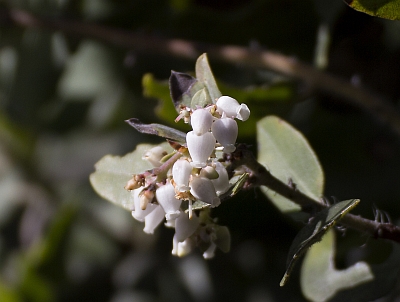
Manzanita tree along trail at Morgan Territory

Manzanita tree along the trail

Posted in Amphibian, Places, Trip Report | Tagged , , , , , , , , , , , , , , , , , | Leave a comment

Afternoon Walk and Rattlesnake at Briones Regional Park

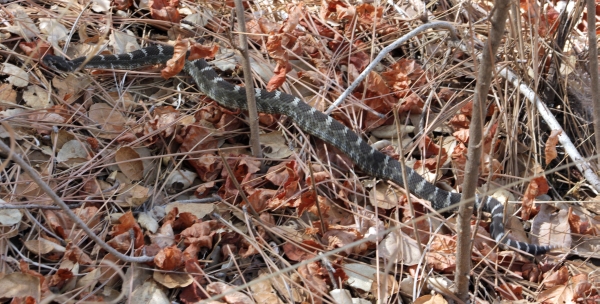
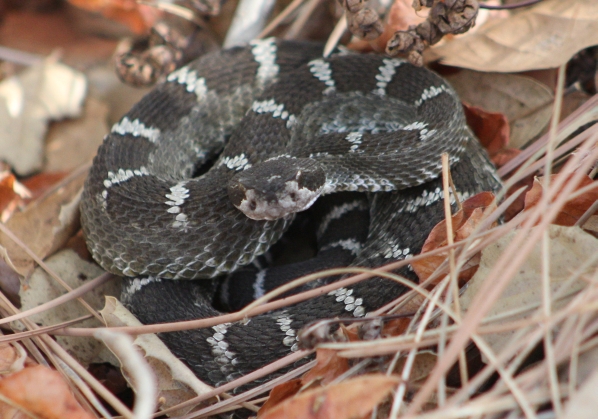
A brief walk around noon in the hot sun at Briones Regional Park didn’t reveal much in terms of spotting many different species, but did give some great views of possibly the largest Western Rattlesnake I have ever seen (it must have been close to three feet if not over). It’s not often that you see them during the day as they are primarily nocturnal.

Western Rattlesnake

Western Rattlesnake at Briones Regional Park

It exhibited some behavior I had never seen before as it slowly poked around the grass near the edge of the trail, moving away from the trail then back toward it, all the while incessantly flicking its tongue in and out. After a good 10 to 15 minutes of this behavior, it slithered away.

Posted in Places, Trip Report | Tagged , | Leave a comment

Rattlesnakes and Kingsnakes on Mines Road

As the nighttime temperatures in the east bay moved in a decidedly warmer direction, we took a night drive along Mines Road last weekend to see what creatures, particularly snakes, we could find.

Cruising around a few nights earlier revealed a Grey Fox and  a Great-Horned Owl, but no snakes. We hypothesize that the reason for the reptilian absence was due to nighttime temperatures around 60F. The temperature during the drive this weekend, however, was close to a balmy 70F.

Sure enough, Mines Road (and possibly the weather) did not disappoint. About 10 minutes down the road from the Tesla Road turnoff, we found a little-over-a-foot-long Western Rattlesnake slowly crossing the road.

Western Rattlesnake

Western Rattlesnake on Mines Road

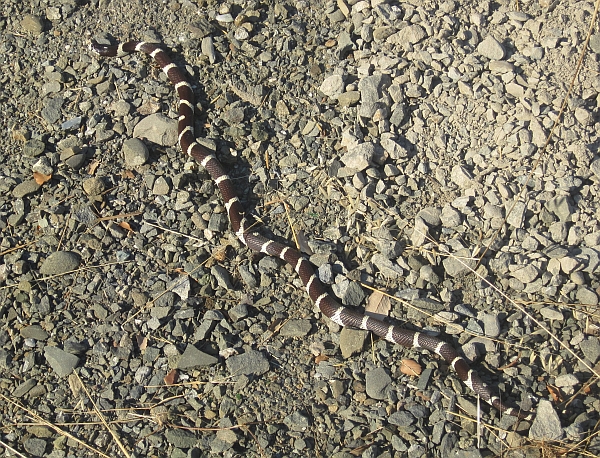
Further down the road, we encountered a snake we had been looking for for quite a while: a California Kingsnake, and a big one at that. This one cruised across the road fairly quickly, but we were still able to get some pictures.

California Kingsnake

California Kingsnake

Even further along the road, our tires almost screeched to a halt over a second California Kingsnake, this one much smaller and much more reluctant to leave the warm road (it eventually did with some help).

California Kingsnake

California Kingsnake

To top the night off, on the drive back, we found another Western Rattlesnake crossing the road, bringing our tally to four snakes total – two king and two rattle.

While seeing snakes on the road is exhilarating, the excitement is bittersweet. Snakes are constantly killed on roads, so if you can, please try and be careful when driving.

Posted in Trip Report | Tagged , , , , | 1 Comment